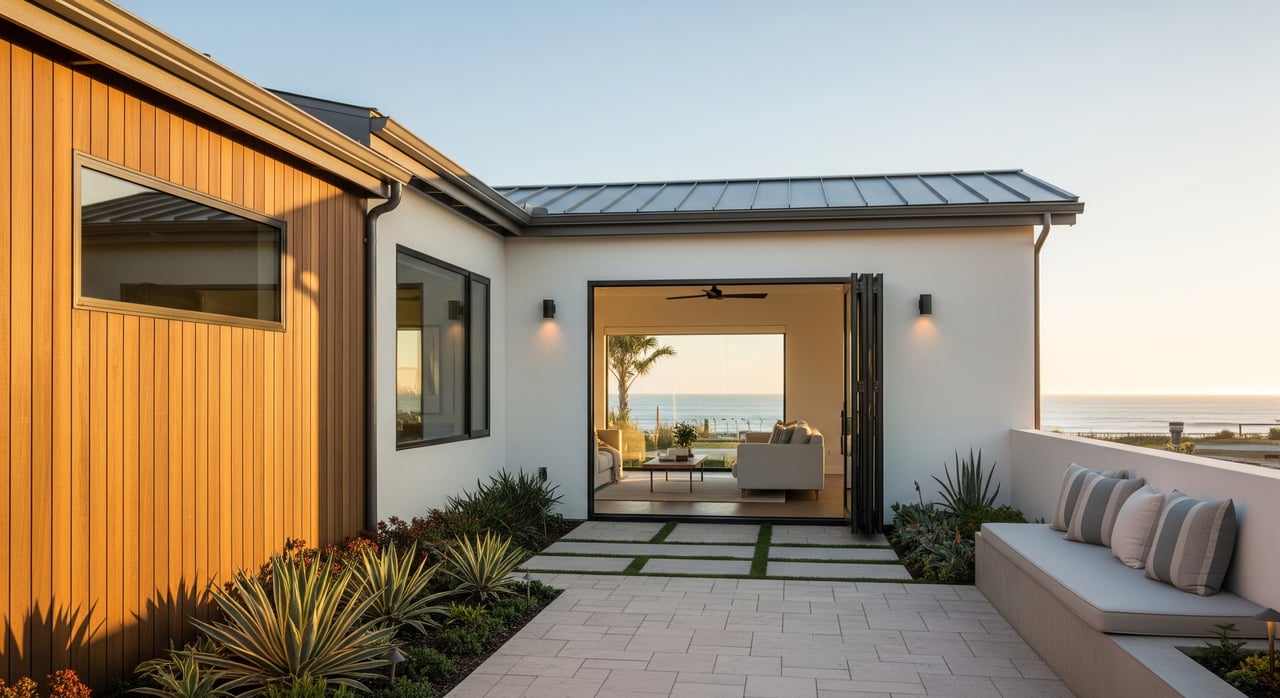
Thinking about adding a backyard home or converting space you already have? In Oceanside, a well‑designed ADU can unlock flexibility for family, guests, or long‑term rental income. The key is aligning smart design with local rules, coastal conditions, and a clear budget. In this guide you’ll learn what Oceanside allows, how to navigate site and utility constraints, what it costs, and the practical steps to get from idea to permit. Let’s dive in.
Oceanside rules that shape your ADU
Sizes, setbacks, and height
State‑compliant ADUs are allowed across most residential lots in Oceanside. By right, you can build up to 850 square feet for a studio or one bedroom, and up to 1,000 square feet for two or more bedrooms with 4‑foot side and rear yard setbacks and a typical 16‑foot height for detached units. Oceanside also allows detached ADUs up to 1,200 square feet in some cases. Review the city’s current standards on the City of Oceanside ADU page and the statewide guidance in the HCD ADU Handbook to confirm details for your lot.
- Reference: City of Oceanside ADU page
- Reference: HCD ADU resources
Parking, fees, and owner occupancy
Oceanside generally requires one parking space for an ADU unless your project qualifies for a state parking exemption. Common exemptions include being within a half‑mile walking distance of transit and conversions within existing structures. Oceanside has waived many city development impact fees for ADUs it controls, although school fees may still apply. State law also prohibits cities from imposing owner‑occupancy requirements for most ADUs, which gives you more flexibility to rent long‑term.
- Reference: City of Oceanside ADU page
Permit timing and pre‑approved plans
Oceanside aims to complete ADU building‑permit reviews within 60 days of a complete submittal. New state rules require cities to offer pre‑approved plan programs, and applications that use a locally pre‑approved plan must be processed within 30 days. This can reduce both design time and carrying costs.
- Reference: City of Oceanside ADU page
- Reference: AB 1332 pre‑approved plan resources
Short‑term rentals
Most ADUs permitted on or after September 9, 2017 cannot be used for short‑term rentals. If your plan depends on Airbnb‑style income, you will need a long‑term strategy.
- Reference: Oceanside short‑term rental rules
Coastal zone and appeals
Parts of Oceanside sit within the Coastal Commission’s appeal area. If your property is within this area, expect coastal notice requirements and a potential appeal window that can extend timelines. Planning for this early keeps your schedule realistic.
- Reference: Coastal Commission coastal ADU guidance
Read your site like a pro
Flood and coastal hazards
If your lot is in a FEMA Special Flood Hazard Area, your ADU may need an elevated foundation and additional documentation. Start with the city’s floodplain page and the FEMA Map Service Center to check your address and understand base‑flood elevation requirements.
- Reference: Oceanside floodplain information
- Tool: FEMA Map Service Center
Utilities and meters
Confirm early whether your ADU will connect through existing water and sewer or require a meter upsizing. Oceanside notes a possible pro‑rated water buy‑in if a larger meter is needed, and separate utility work can affect cost and timing. Electrical panel upgrades are common for new loads like HVAC and induction cooking.
- Reference: Oceanside Water Utilities and meter info
Easements and HOAs
Utility easements and recorded conditions can limit where you build. If you are in an HOA, associations cannot ban ADUs outright but can apply reasonable design standards. Recent state changes also limit fees and fines related to ADUs. Review your CC&Rs and coordinate early.
- Background: ADUs in HOAs overview
Design for the coast and everyday living
Durable, low‑maintenance materials
Oceanside’s marine environment rewards materials that resist moisture and corrosion. Use stainless or hot‑dip galvanized fasteners, exterior‑rated hardware, and high‑quality coatings. Detail roof and wall flashing carefully to manage water, and favor fiber‑cement or other durable cladding. Pair with drought‑ and salt‑tolerant landscaping to reduce maintenance.
Smart layouts and privacy
Popular formats that rent well and live well include 500 to 850 square foot one‑bedroom units and two‑bedroom plans up to 1,000 square feet. Aim for privacy with thoughtful window placement, screened patios, and separate entries. Plan for cross‑ventilation and good daylight to reduce energy use and improve comfort.
- Reference: City of Oceanside ADU standards
Energy code, EV‑ready, and solar
Most new ADUs must meet Title 24 energy standards and CALGreen. Coordinate early on insulation, windows, mechanical systems, and documentation. If you include new parking, plan EV‑ready wiring. Decide up front whether you will make the ADU solar‑ or battery‑ready to manage future operating costs.
- Reference: California Energy Code support
Access for all ages
Oceanside attracts multigenerational households. A step‑free entry, wider doors, a curbless shower, and blocking for future grab bars make your ADU more flexible and marketable over time.
- Reference: HCD ADU resources
What it costs in Oceanside
Total project costs vary by type, size, and site work:
- Garage or interior conversions: about 80,000 to 200,000 dollars.
- Attached ADUs: about 120,000 to 300,000 dollars.
- Detached ADUs: about 150,000 to 400,000 dollars or more.
- Typical ranges of 200 to 450 dollars per square foot are often cited, depending on finishes and site conditions.
Budget separately for plans, engineering, permits, school fees, potential water meter upsizing, and inspections. Oceanside has waived many city development impact fees for ADUs under its control, which helps, but plan contingencies for utilities or coastal requirements.
- Reference: ADU cost guide
- Reference: City of Oceanside ADU page
A step‑by‑step plan you can follow
- Pre‑screen your lot. Review Oceanside’s ADU page, then check the FEMA map and whether you are in the coastal appeal area.
- Confirm utilities. Ask Oceanside Water Utilities about meter size and potential buy‑in. Note any electrical panel upgrades.
- Choose your path. Consider a conversion or attached ADU for value, or a detached unit for privacy and yard use.
- Pick a design strategy. Ask the city about pre‑approved ADU plans to shorten review times, or work with a designer who understands Title 24 and CALGreen.
- Align scope and budget. Get multiple bids. Include soft costs, school fees, and a contingency for site work.
- Submit a complete package. A complete application starts the 60‑day clock. If you use a pre‑approved plan, the target is 30 days. Respond quickly to plan check comments.
- Prepare for inspections and closeout. Expect routine building inspections and, if in the coastal area, possible notices and appeals.
- Reference: AB 1332 pre‑approved plan resources
- Reference: Oceanside ADU page
Common pitfalls to avoid
- Ignoring flood or coastal constraints that trigger elevation or appeals.
- Overlooking parking exemptions and paying for unnecessary work.
- Delaying utility confirmations that lead to surprise meter or panel costs.
- Designing without Title 24 coordination, then revising late in plan check.
- Assuming short‑term rental income when local rules prohibit it.
Bring your plan to life
A thoughtful ADU can add flexibility, comfort, and long‑term value in Oceanside when it fits the site, the rules, and your budget. If you want a second opinion on how an ADU could impact resale, rental strategy, or a purchase decision in North County, connect with the local team you can trust. Start a conversation with Elizabeth Reed & Associates.
FAQs
Can I build an ADU on my Oceanside lot?
- Start by confirming setbacks and size on the City of Oceanside ADU page, then check flood and coastal appeal maps to identify any special requirements.
How long does Oceanside ADU permitting take?
- Oceanside targets 60 days for complete applications, and 30 days if you use a locally pre‑approved plan, with coastal notices or appeals potentially extending timelines.
Are parking spaces required for Oceanside ADUs?
- One space is typical unless you qualify for a state exemption, such as being within a half‑mile of transit or converting existing space.
Can I use an Oceanside ADU for Airbnb or short stays?
- No, ADUs permitted on or after September 9, 2017 cannot be rented for fewer than 31 days under Oceanside’s rules.
How much does an Oceanside ADU cost to build?
- Recent guides show about 80,000 to 200,000 dollars for conversions, 120,000 to 300,000 dollars for attached units, and 150,000 to 400,000 dollars or more for detached builds, plus soft costs and possible utility upgrades.