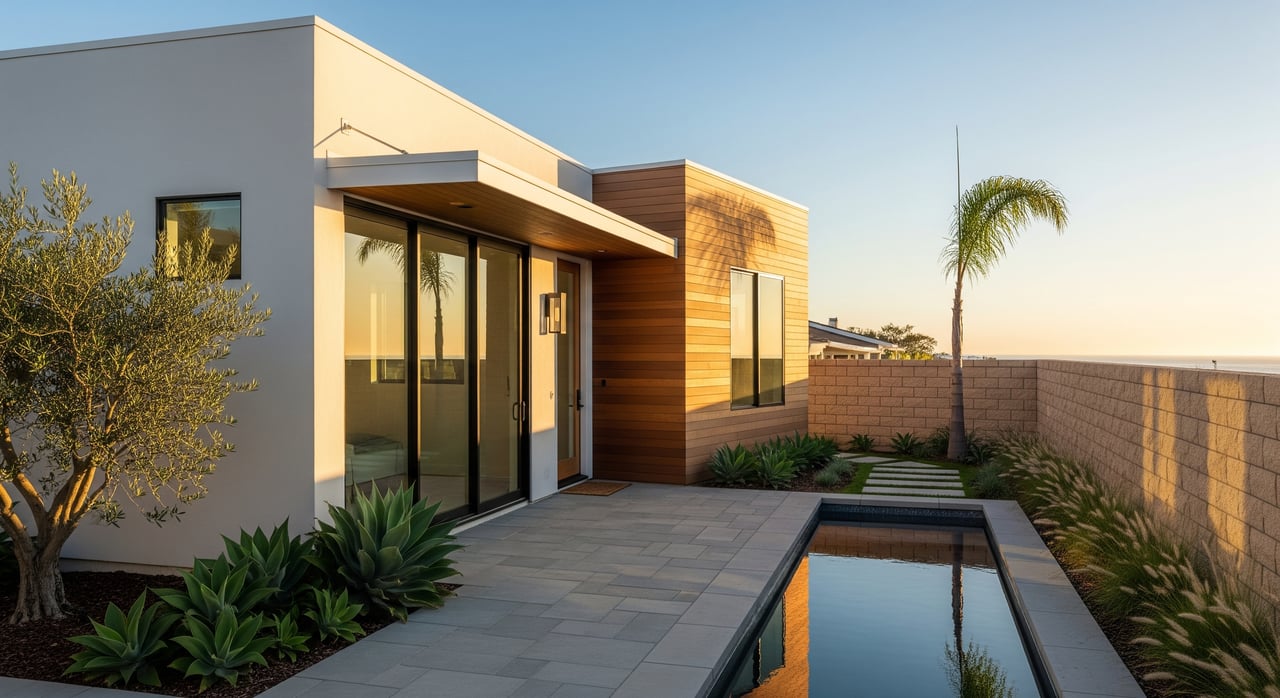
If you are weighing whether to sell or to create new value where you live, an accessory dwelling unit can be a smart path. In Oceanside, ADUs unlock flexibility for multigenerational living, long-term rental income, and future resale appeal. The key is to build within the rules and manage intentionally. This guide explains what is allowed, how to permit, and how to decide if building beats listing for your goals.
Why build an ADU now
ADUs give you options. You can house family, downsize into the ADU and rent the main home, or create a compliant long-term rental. Oceanside aligns with California’s pro-ADU framework, which sets clear permit timelines and objective standards. The city also waives certain development impact fees it controls for many ADUs, which helps overall feasibility according to Oceanside’s ADU resources.
If you are thinking about short-term rentals, know the rule that defines this guide’s title: in Oceanside, if your property has an ADU or JADU permitted on or after September 9, 2017, you cannot operate any part of that property as a short-term rental of 30 days or fewer. That prohibition applies to the ADU, the JADU, and the primary residence at the address per the city’s STR program. So build it, don’t list it for STRs. Focus on long-term or personal use.
Understand ADU rules and limits
Oceanside implements state ADU law with local standards that are objective and ministerial. The state sets the floor for size, setbacks, and review timelines, and the city applies those rules through its zoning code and building process see California’s ADU statute and Oceanside’s ADU page.
Types of ADUs to consider
- Attached ADU: Built as an addition to your primary home. Often limited to up to 50 percent of the primary dwelling in some cases, within overall size caps. Good for shorter utility runs and lower fees.
- Detached ADU: A separate structure. Oceanside allows up to 1,200 square feet locally, with common state minimums of 850 square feet for a studio or one bedroom and 1,000 square feet for two or more bedrooms where the state exemption applies per the city’s guidance.
- Conversion ADU: Created within existing space, such as a garage or part of the primary home. Often the fastest and least expensive path to permits.
- Junior ADU (JADU): A compact unit, up to 500 square feet, carved from the footprint of the primary home. Useful for multigenerational living or an office-plus-guest suite city ADU resources.
Common site constraints to check
- Setbacks and height: Many qualifying ADUs can use 4-foot side and rear setbacks. Detached ADUs built at the 4-foot setback are often limited to 16 feet in height, or 18 feet near rail stations. Taller or second-story additions may need standard setbacks per the city’s ADU standards.
- Parking: One onsite space can be required unless an exemption applies. Exemptions include ADUs within walking distance of transit, conversions, areas with no on-street permit program, and where car share is nearby. Garage conversions are not automatically required to replace covered parking city parking guidance.
- Utilities and access: Verify sewer, water, electrical capacity, clear access for emergency services, and egress for bedrooms. A water meter upsizing may trigger a prorated buy-in fee per city notes.
HOA and overlay considerations
- HOAs cannot ban compliant ADUs. California Civil Code 4751 voids CC&Rs that effectively prohibit or unreasonably restrict ADUs. HOAs may apply reasonable design standards that do not make construction impracticable review the statute.
- Coastal, historic, or view overlays can add design constraints. Confirm overlays early and design with neighbors in mind.
- If you are considering STRs elsewhere on your property, remember Oceanside’s ADU-triggered prohibition and the city’s separate STR permit caps and rules STR program details.
Permits and approvals step by step
Oceanside processes ADUs by right with ministerial review. The city targets a 60-day review window once your application is complete. The clock pauses when the plans are back in your court for revisions per city process notes.
Pre-design due diligence
- Gather a current survey, title report, and utility information.
- Map existing structures, trees, slopes, and easements.
- Confirm setbacks, height, and any overlays with the city or a design professional.
- If in an HOA, request the architectural guidelines up front and cite Civil Code 4751 if needed.
- Walk the site to plan utility routes, access, privacy, and construction staging.
Submittals, reviews, and inspections
- Plan set: Site plan, floor plans, elevations, sections, structural details, Title 24 energy documents, and utility notes.
- Reviews: Planning and building plan check with ministerial comments. Respond quickly to keep the clock moving.
- Inspections: Typical milestones include foundation, rough trades, insulation, drywall, and final. Fire and building code compliance apply; sprinklers can be required in specific cases per building code.
Timeline and bottlenecks to expect
- Design completeness is the biggest driver of speed. Clean plans mean fewer rounds of comments.
- Utility upgrades, meter changes, or sewer laterals can add time.
- Detached ADUs are often treated like a new dwelling for fee calculation and plan check, which can add steps; conversion ADUs usually move faster on fees and reviews per city guidance.
- A pre-application meeting or an experienced plan runner can help avoid rework.
Design and construction roadmap
Assemble the right project team
- Designer or architect: ADU experience in Oceanside, code fluency, and good permit track record.
- Structural engineer: Required for most detached units and significant alterations.
- General contractor: Licensed, insured, local references, and ADU-specific schedule and budget discipline.
- Clear scope and fixed milestones: Include allowances for utility work, site restoration, and contingencies.
Choose a build approach
- Conventional stick-built: Maximum customization and seamless integration with your home. Longer site time.
- Modular or prefab: Faster schedule and fewer neighborhood disruptions. Plan for craning access and foundation work.
- Conversion: Often the most cost-effective. Verify ceiling heights, natural light, and sound insulation early.
Plan for access, privacy, and parking
- Separate entries with lighting and clear wayfinding.
- Privacy: Fencing, layered landscaping, window placement, and sound attenuation in shared walls.
- Storage and bikes: Add lockable exterior storage or integrated closets.
- Parking: Confirm whether you qualify for an exemption and plan hardscape accordingly parking standards.
Quality, energy, and sustainability
- Durable finishes: Moisture-resistant materials, easy-clean surfaces, and low-maintenance exteriors.
- Efficient systems: Heat pump HVAC, heat pump water heaters, and LED lighting to reduce operating costs.
- Future-proofing: Conduit for EV charging, smart thermostats, and universal design touches for aging in place.
- For broader state context and best practices, the HCD ADU Handbook is a helpful reference see HCD resources.
Budget, finance, and return
Every site is unique, but you can control many cost drivers while protecting quality.
Cost drivers and savings levers
- Major categories: Design and engineering, permits and plan check, site work and utilities, structure and finishes, and soft costs.
- Savings levers: Favor standard footprints, simplify rooflines, use durable mid-grade finishes, and minimize utility trenching.
- Fees: Oceanside has waived certain development impact fees it controls for many ADUs. Detached ADUs are often assessed more like new dwellings, while conversions and attached units are often charged as additions or remodels, which can be lower overall per city fee notes.
Financing options to compare
- Home equity line or loan for flexible draws.
- Cash-out refinance to lock a single fixed payment.
- Construction or renovation loans with interest-only during build.
- Specialty ADU financing products. Compare total cost, draw schedules, and rate locks to align with your construction timeline.
Rental income and payback models
- Long-term rental only if your ADU or JADU was permitted on or after September 9, 2017. Short-term rentals of 30 days or fewer are prohibited on such properties in Oceanside per the STR program.
- Estimate rent by comparing similar units near you, subtract operating costs, reserves, and any property management.
- Consider owner-use scenarios, such as living in the ADU and renting the main home for cash flow.
Resale impact and tax angles
- A well-executed ADU can improve marketability and expand your buyer pool. Appraisal treatment varies by comps and income potential.
- Adding an ADU may affect property taxes. Discuss implications with a tax professional.
- California law on owner-occupancy standards continues to evolve, and statewide guidance updates periodically. Check the latest from HCD and the city when planning ownership and use state statute and HCD resources.
Rent and manage with confidence
Lease structure and screening
- Use a written lease with clear house rules on parking, noise, and shared outdoor spaces.
- Screen fairly and consistently. Verify income, rental history, and references.
- Set expectations for maintenance requests and communication.
Insurance, safety, and compliance
- Notify your insurer about the new unit and adjust coverage for structure and liability.
- Confirm smoke and carbon monoxide alarms, egress windows, and exterior lighting.
- Keep your building final and any required covenants on file. If you ever contemplate STR activity on a property with an ADU permitted on or after September 9, 2017, do not proceed. Oceanside requires STR permits citywide and prohibits STR use on those ADU properties, with significant penalties for violations see STR rules and ordinance and adopted penalties.
Ongoing management and maintenance
- Schedule seasonal maintenance and document all work.
- Consider a professional manager to protect your time and ensure compliance.
- Revisit rent and market conditions annually to stay competitive and fair.
Next steps and who can help
If you are deciding between building and listing, start with a site evaluation, overlay review, and a realistic budget. Verify local rules directly with Oceanside’s Planning Division and lean on the state’s ADU resources for context Oceanside ADU page and HCD ADU guidance. For short-term rentals, remember that properties with an ADU or JADU permitted on or after September 9, 2017 cannot operate STRs, and Oceanside’s broader STR program includes caps, non-transferable permits, and meaningful fines STR overview.
If your goals point to long-term income, multigenerational living, or a future sale with broader appeal, building may be the right move. If you need liquidity now or prefer a simpler path, listing could be better. When you want a confidential read on value, timeline, and risk, schedule a Private Consultation with Elizabeth Reed & Associates. We will review your site, connect you with vetted designers and builders, and model build-versus-list outcomes so you can move forward with clarity.
FAQs
Can I use my new ADU as a short-term rental in Oceanside?
- No, not if the property has an ADU or JADU permitted on or after September 9, 2017. In that case, the ADU, JADU, and main home at that address are prohibited from STR use of 30 days or fewer city STR rules.
What size ADU can I build?
- Common allowances include up to 850 square feet for a studio or one bedroom, up to 1,000 square feet for two or more bedrooms under the state exemption, and up to 1,200 square feet for detached ADUs under city rules. Always confirm your site specifics with the city ADU standards.
How long do permits take?
- Oceanside targets ministerial review within 60 days once your application is complete. The clock pauses while you address plan check comments city process.
Do I need to add parking for an ADU?
- Often no. Many ADUs qualify for parking exemptions, including those near transit or created by conversion. Garage conversions are not automatically required to replace parking parking guidance.
What happens if I list my ADU as an STR without a permit?
- Operating an STR without a valid permit can trigger fines of $1,500 for a first violation and $2,500 for subsequent violations, plus a potential 18-month ineligibility for an STR permit after multiple violations. Higher fines apply for health and safety violations ordinance penalties.
My HOA says I cannot build an ADU. Is that allowed?
- HOAs cannot enforce rules that effectively prohibit or unreasonably restrict compliant ADUs. They can require reasonable design standards. Review California Civil Code 4751 and your HOA’s guidelines, and coordinate with the city statute text.
Where can I find official guidance and best practices?
- Start with Oceanside’s ADU page for local standards and forms and the California HCD ADU Handbook for statewide guidance and permitting best practices Oceanside ADU and HCD ADU resources.